
The last day before you head north is always busy. You pack, you clean out the fridge, you lock up and you drive to the airport. Somewhere in all of that, it is easy to miss a step.
That is why the first visit of the season matters so much. We call it the post-departure visit, and it happens shortly after you leave.
What the post-departure visit looks for
On this first visit, Sekina goes through the home with your departure in mind. These are the things owners most often leave behind by accident:
- a door that did not get locked
- the water still on at the main
- the thermostat on the wrong setting
- a window cracked open
- food left in the fridge or the pantry
None of this means you did anything wrong. Everyone forgets something on travel day. The point of the visit is to find it in the first few days, instead of in the first few weeks.
She also leaves the home in what we call Home Watch Mode. Interior doors stay open, and so do the cabinet doors at each water source, so air can move. Sink drains are left open. If you want a list to work through before you go, our departure checklist covers it.
Why the water goes off at the main
The Home Watch Academy is clear on this point: "Water should be OFF at the main any time the home is unoccupied."
Here is why. Your home has supply lines to the toilets, sinks, ice maker and washer. Any one of them can fail. If the water is on at the main when a line fails, water keeps flowing until someone finds it. In an empty home, that could be days. If the water is off at the main, only the water already in the pipes can leak out.
Water damage and mold are the two biggest threats to an empty Florida home. Turning off the main is the simplest step against the first one.
How we handle the water on every visit
We follow the same routine at every home, every time:
- Sekina turns the water on slowly at the main, so the pipes are not jolted.
- She works through the home one water zone at a time, such as the kitchen or a bathroom. She never leaves a zone while water is running.
- She runs each faucet and shower and flushes each toilet. This keeps the drain traps wet, so sewer gas and bugs do not come up through dry drains.
- She looks under sinks and around toilets and appliances for drips or damp spots.
- Before she leaves, she turns the water off at the main and takes a photo of the valve to prove it.
That photo goes into your report, along with the rest of the visit. You can read more about what happens on a Home Watch visit.
Humidity above 50 percent
Water is one threat. Humidity is the other. The Home Watch Academy puts it this way: "Humidity in excess of 50% for an extended time can produce conditions conducive to mold growth."
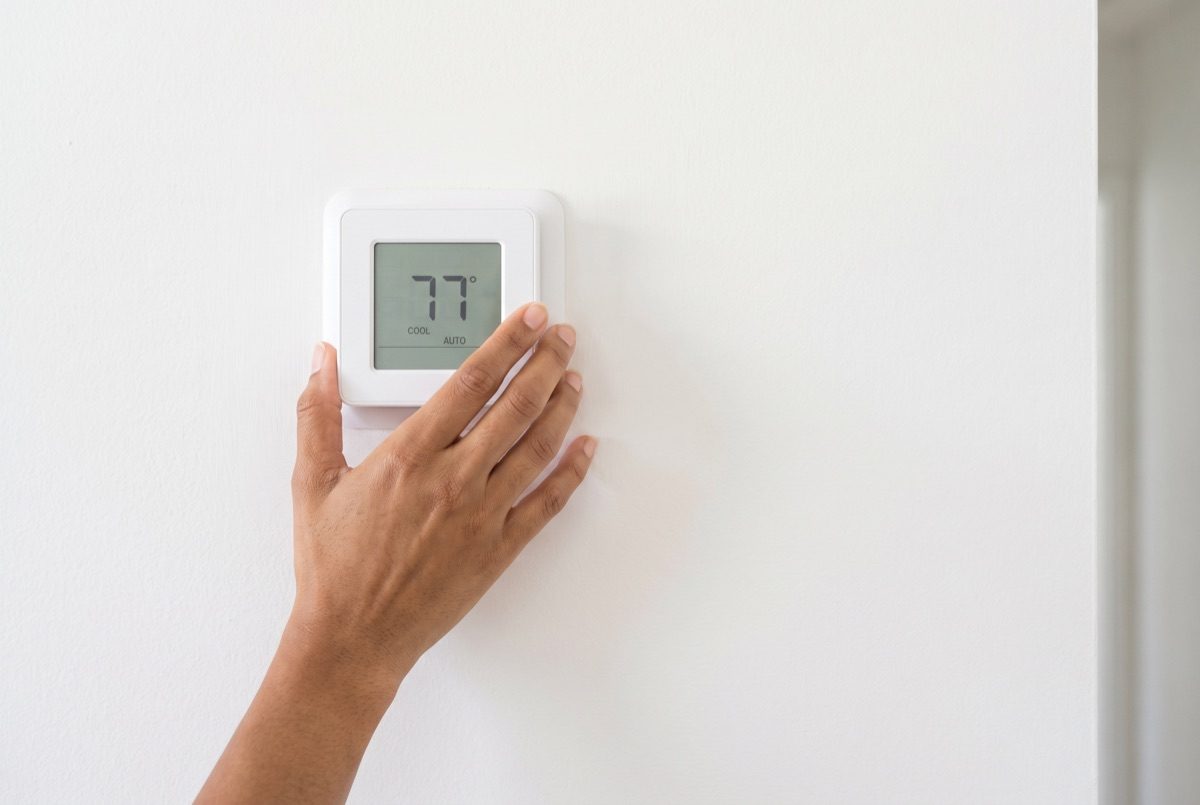
So on every visit, Sekina reads the humidity with a meter. The target is at or under 50 percent. She also checks that the thermostat is set to 76 to 78 degrees, on COOL and AUTO, and that the air conditioning is actually cooling. A rising number is easier to catch when someone reads it on every visit.
What we can and cannot do
No one can promise that a pipe will never fail or that an air conditioner will never stop. Our job is to detect a problem early, while it is still small. If something needs attention, we call you the same day. If it needs repair, we introduce you to two or three local vendors, and you choose.
The last visit before you come back
The season ends with a visit too. We call the one just before you return the Murphy's Law visit, after the old saying that anything that can go wrong will.
On this visit, Sekina checks the things you will touch first. Are the appliances working? Does the TV turn on? Are the clocks right? Is the air conditioning running well, and is there hot water? The goal is no surprises when you walk in.
One thing to know: we do not turn the water on before your arrival. The main stays off until you are home, and turning it back on is your first job when you walk in the door.
Plan your first visit
If you are leaving soon, the best time to set up your post-departure visit is before you go. See our Home Watch visits, then book a 15-minute call with Sekina or call (941) 241-3334.